Teenage rooms: the design to grow up with
When designing family homes and apartments, we pay special attention to spaces for our younger clients – teenagers. In our projects, teenage rooms become their own micro-worlds, where they grow up, learn, socialize or relax.
By analyzing the needs of teenagers at home, we recognized this specific room as a fully standalone space, combining the characteristics of the day and night zone, and providing flexibility, both in use and design. When shaping the interior of teenage rooms, it is especially important to recognize the identity and character of the user, but also to predict how space and design can participate in growing up.
Youth needs in the residential area intertwine elements of ambience for learning, gathering and socializing, leisure, hobbies, rest and learning, which is why elements characteristic of living rooms, studies and bedrooms should be included in the teenage rooms. In our projects, these functional micro-ambiences are created through a unique design, in which the functions are overlapped and connected, thus maximizing all functional units.
Modern teenage rooms
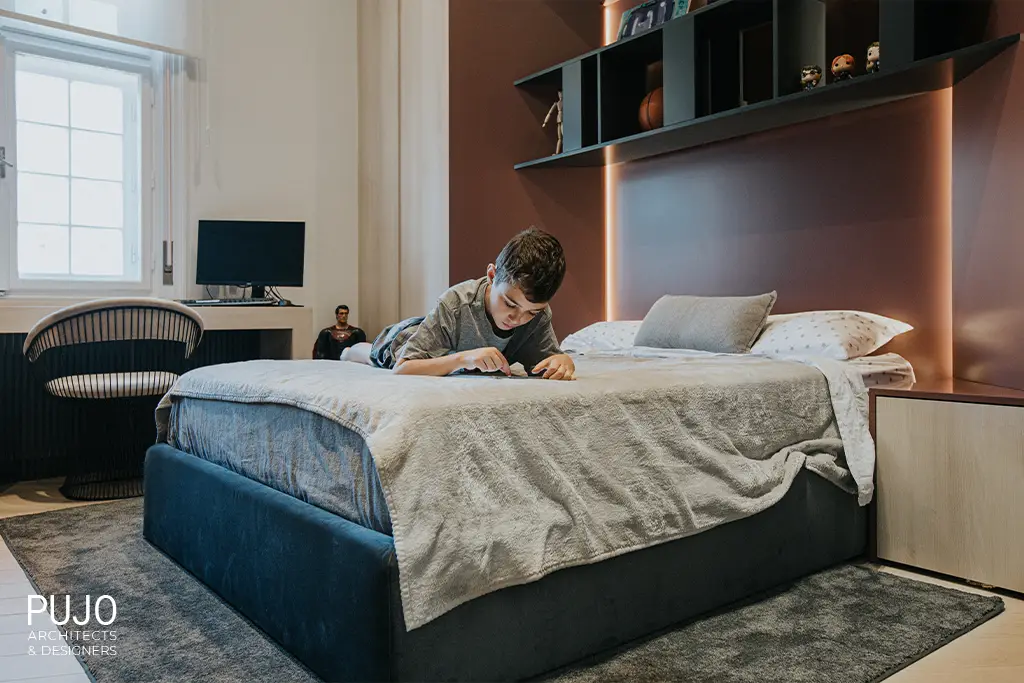
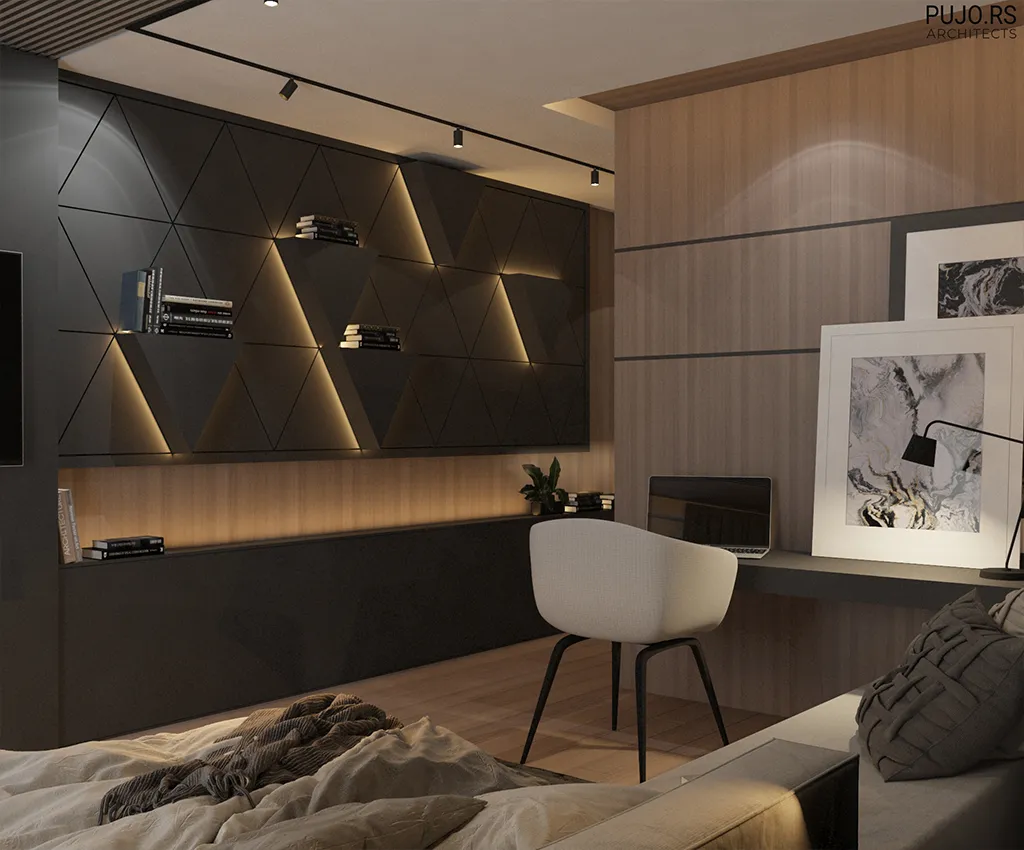
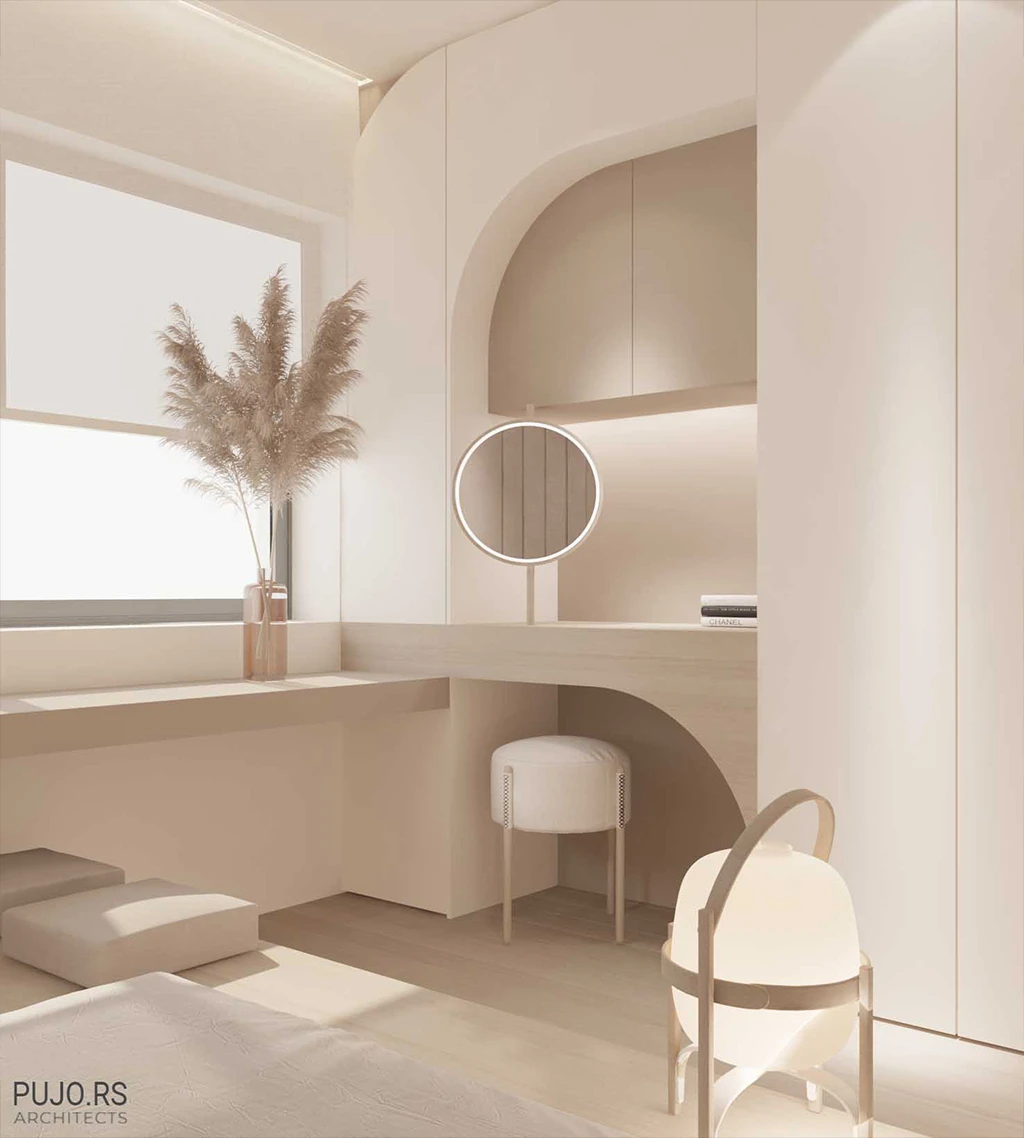
Our design of working and studying space in teenage rooms is demonstrating how to arrange small rooms with multiple overlapping sections. Worktable in the design is becoming multifunctional space, overlaying with storage space – shelves and wardrobes, tailored made in non standard size, to be used for different activities. Same space can be used for studying, socialising, hobbies or even as a home office.
Alternating the day and night zones in teenage rooms
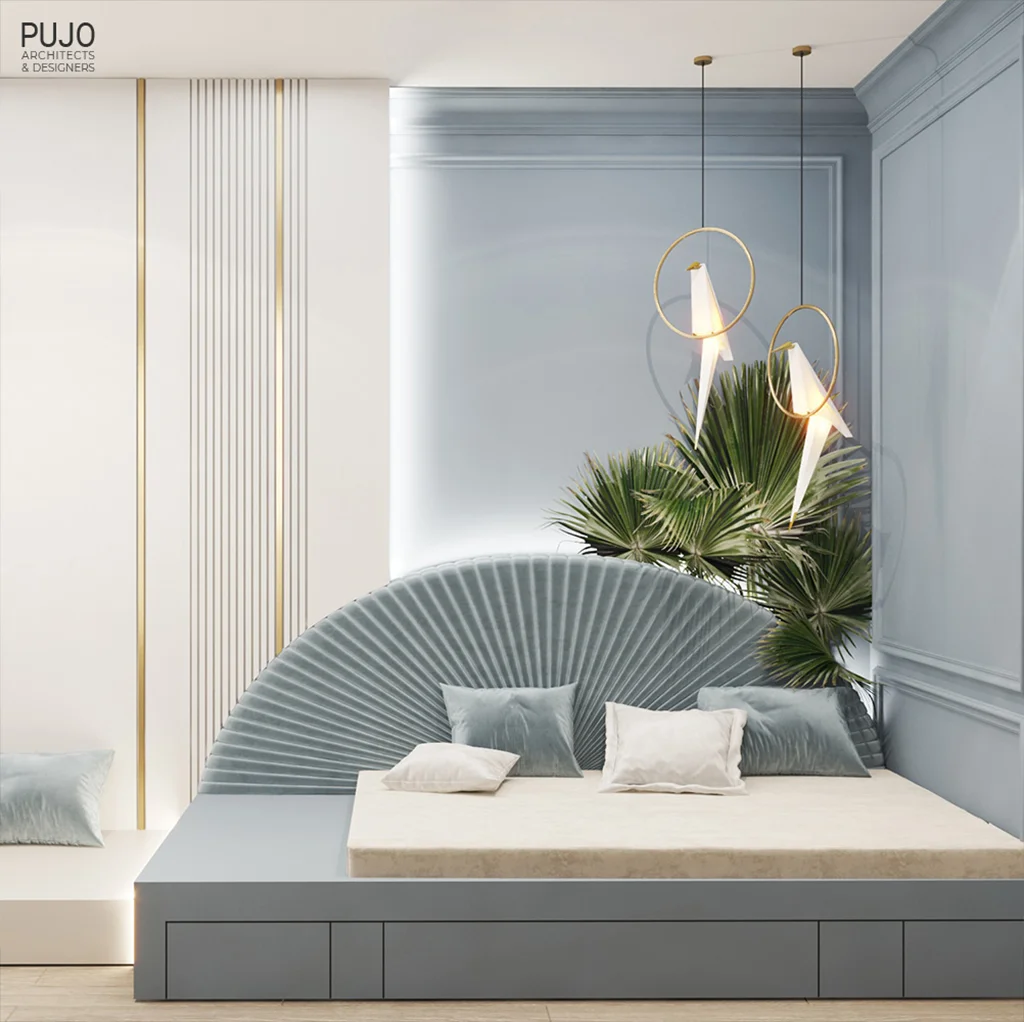
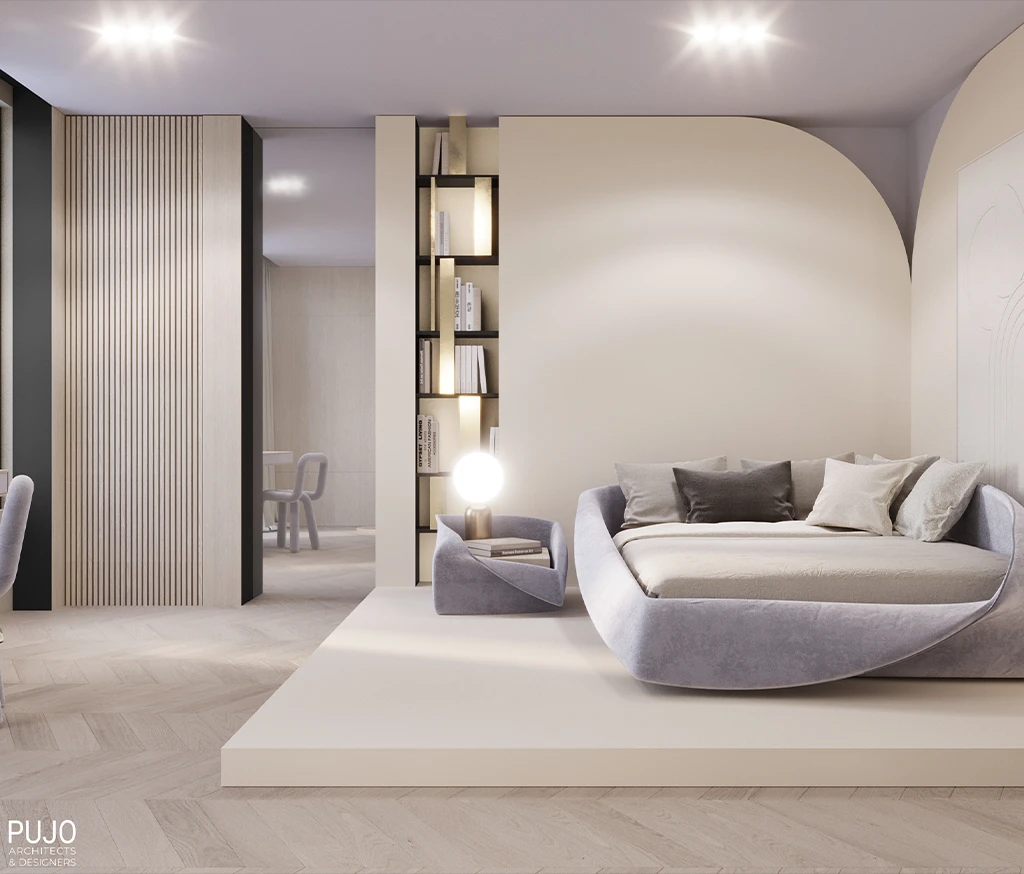
Teen room usage regimes have the biggest changes during the day, which is why they need to support different activities. Because of the flexibility of use, in design, we strive for no function to dominate space, but to all together form a unique whole, connected by striking architectural details, such as arches, colours, or materials.
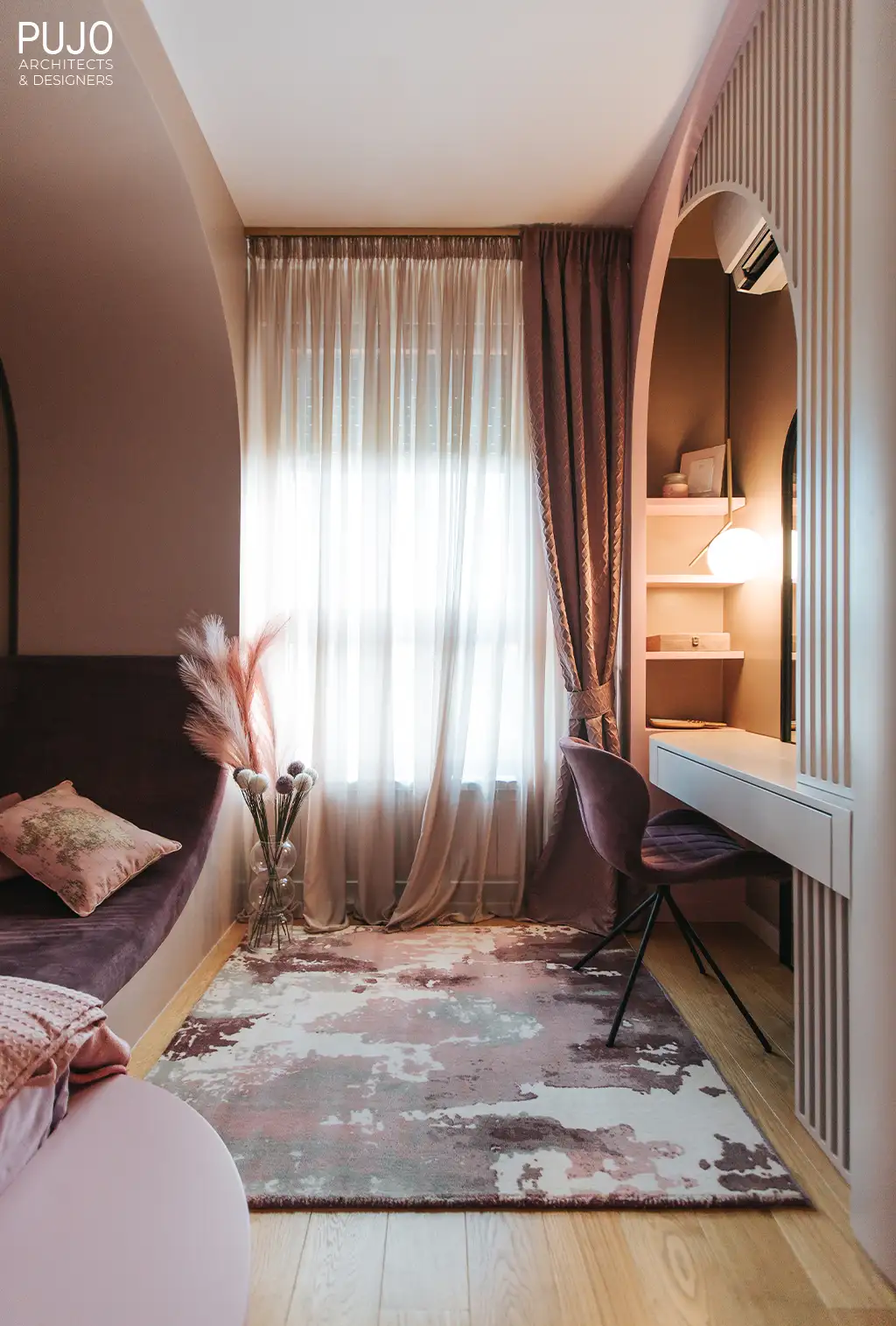
As well as houses and apartments, the teenage rooms have their own division into day and night zones, although their boundaries are dispersed and subtle. In addition to beds, closets and desks that are inevitable functional elements, micro-ambiences of living rooms appear in our teenage room designs, with different, most commonly custom-made seating areas, which enable gathering and socializing in an attractive space.
Personalized teenage room design – Between the child’s room and the “apartment within apartment”
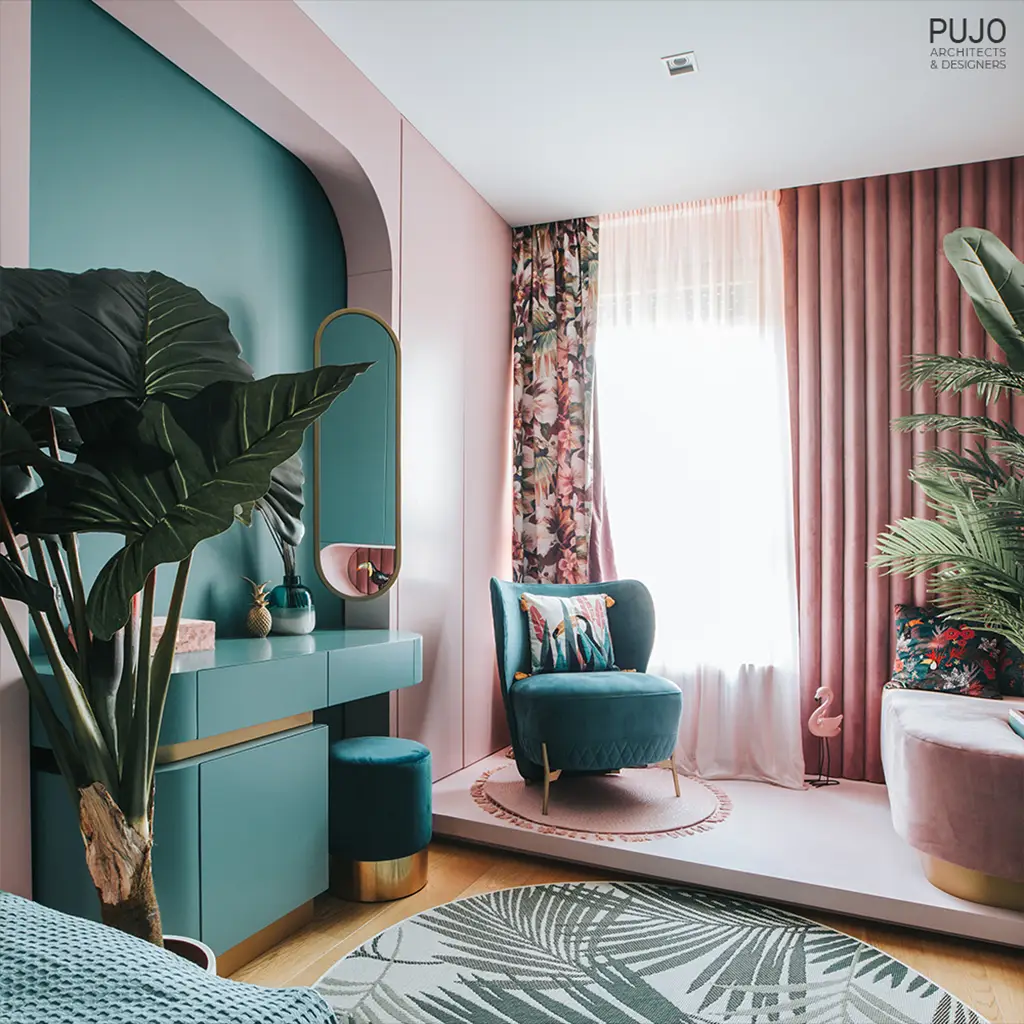
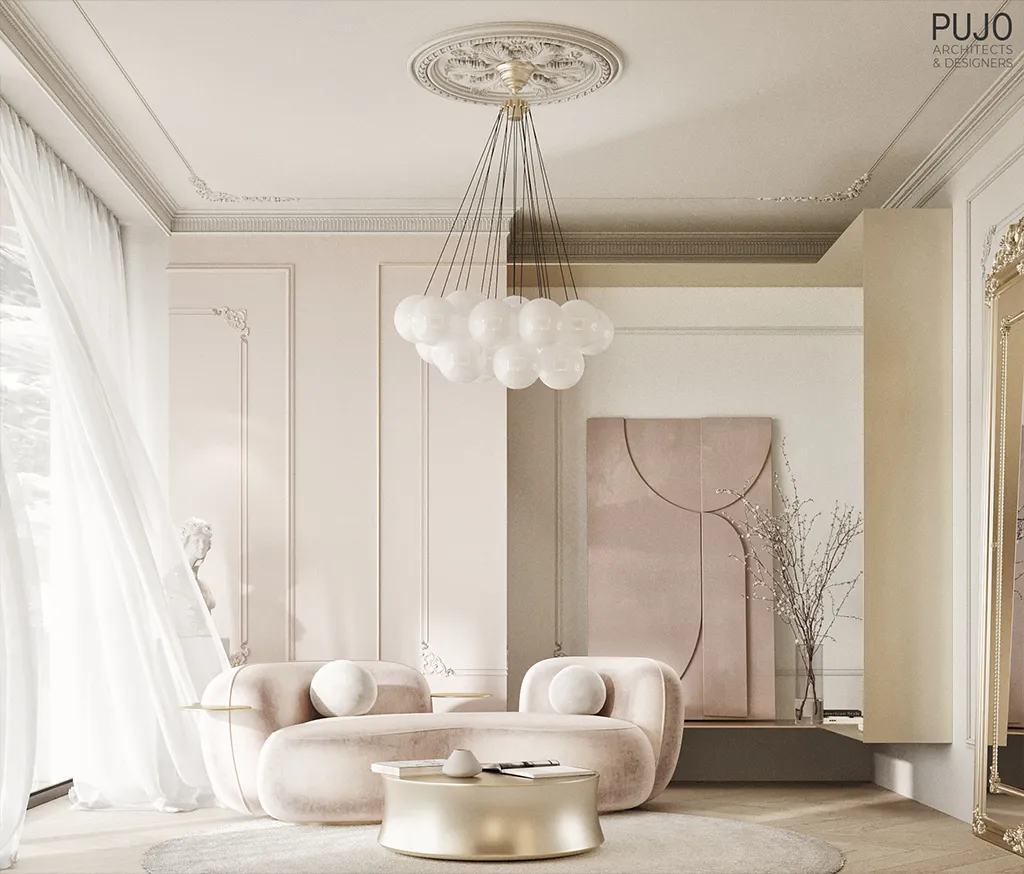
In order to choose an adequate spatial accent that becomes the room’s identity, the first step in design is to meet teenagers and specific interests and hobbies to shape their space. In the personalised design of modern teenage rooms, the key motive is permeating elements of living colours, and strong geometry – as they might meet in children’s rooms, with carefully selected pieces of furniture, disposal spaces, work and gatherings, which resemble the “adult” environments present in the rest of the apartment or house. Our approach to designing teenage rooms treats these spaces almost as separate apartments within apartments, which have autonomy over the rest of the premises.
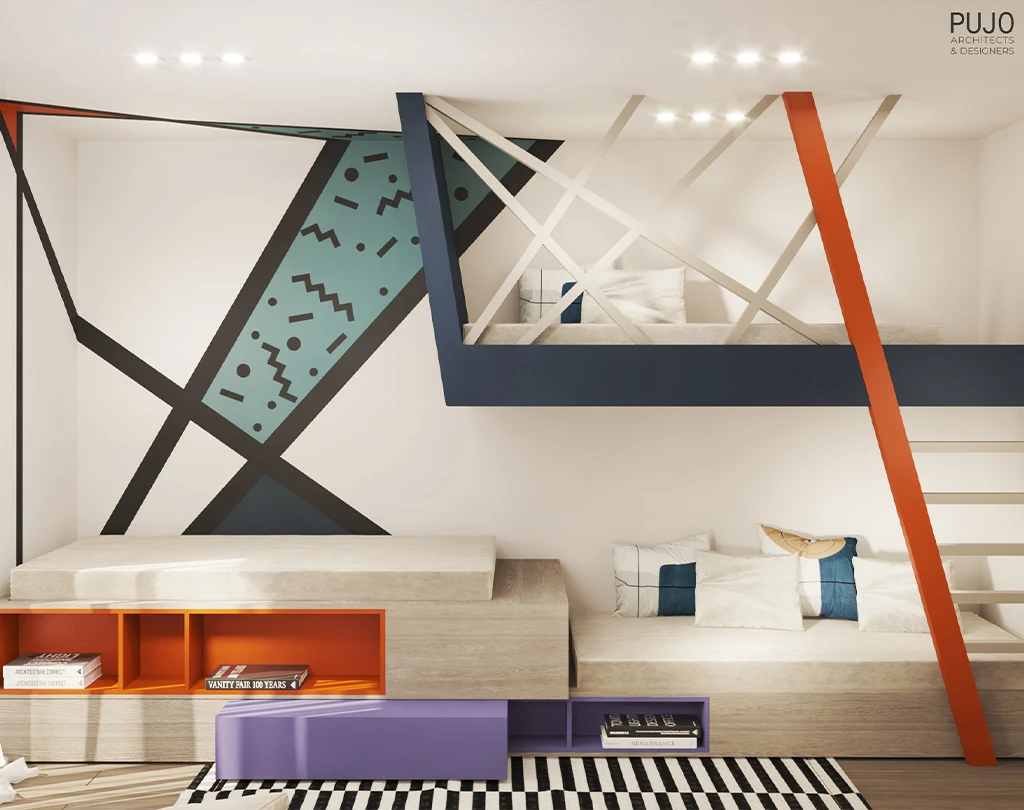
Modern Teen Rooms as Spaces for Socialising and Hobbies
It is precisely during the transition from childhood to adulthood that spaces for gathering and socialising within modern teen rooms become transitional environments in their own right. Compared with the design of children’s rooms, these areas can be understood as an evolution of former play zones. Through spatial articulation and the introduction of different types of seating, they encourage social interaction and allow several people to spend time together in a setting that resembles a vividly designed living room.
Teen rooms are most often inspired by music, specific styles, travel, or a favourite colour that becomes the central design motif of the space. In the apartment on Knez Mihailova Street, the teen room is personalised with gold accents and neon lighting, which, combined with black details, introduce an unconventional design language into an everyday living environment.
In addition to defining areas for socialising, our projects also highlight teenagers’ hobbies as an important part of the design, as details that celebrate these interests help us create unique and highly personalised spaces. Whether the focus is on sports, programming or art, we translate hobbies into an architectural expression that emphasises the individuality of each of our young clients.